
Google Tag Manager is a free tool from Google that lets you manage tracking code on your website without editing the site directly. You add the Converly code once as a tag, and Tag Manager loads it on every page for you. To install Converly through Google Tag Manager, follow the instructions below:
Step 1: Copy your install code
The first step is to grab your Converly install code. In Converly, click Install in the left sidebar and copy the code shown at the top. It is unique to your site, so make sure you copy the exact code shown there rather than reusing code from anywhere else. See Install Converly for the full walkthrough.
Step 2: Create a new tag
The next step is to create a new tag for Converly. Open your Google Tag Manager container, go to Tags in the left menu, and click New. Give the tag a name you will recognise later, such as Converly.
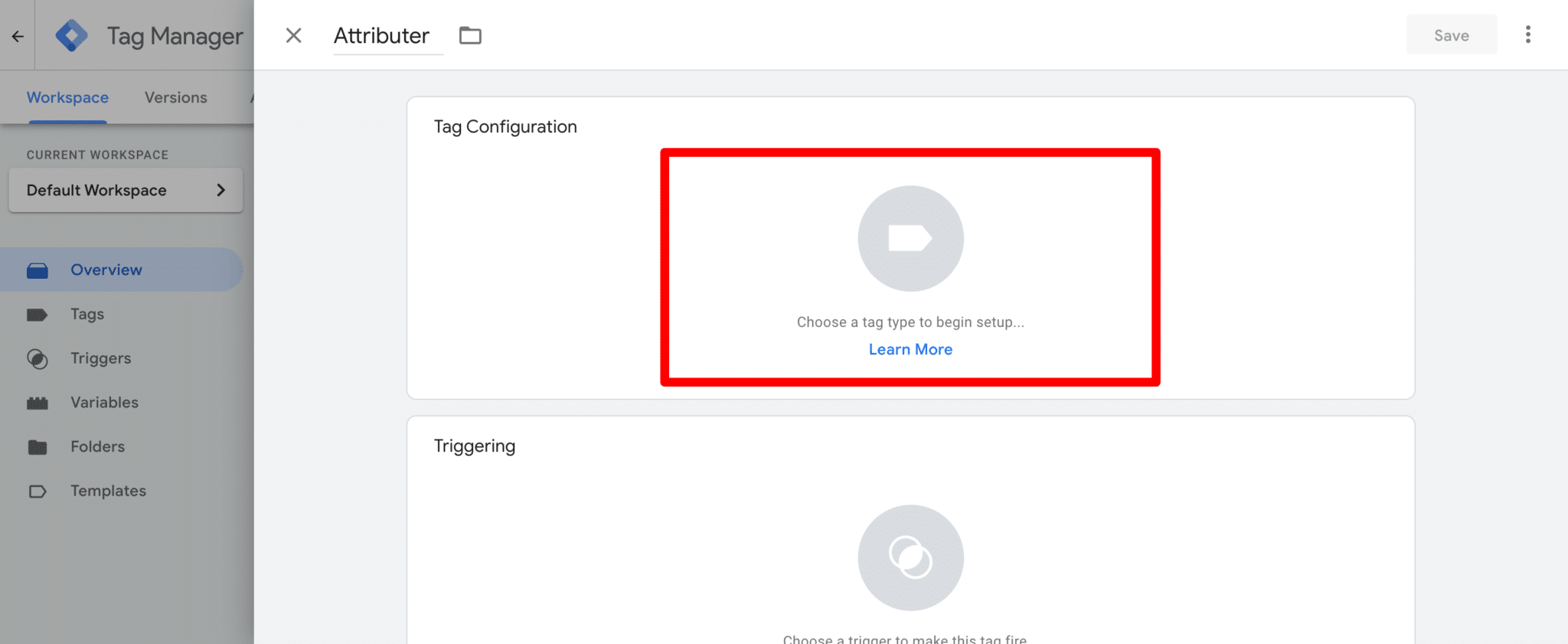
Step 3: Choose Custom HTML and paste your code
Click the Tag Configuration box and choose Custom HTML from the list of tag types. Then paste your Converly code into the HTML box that appears.
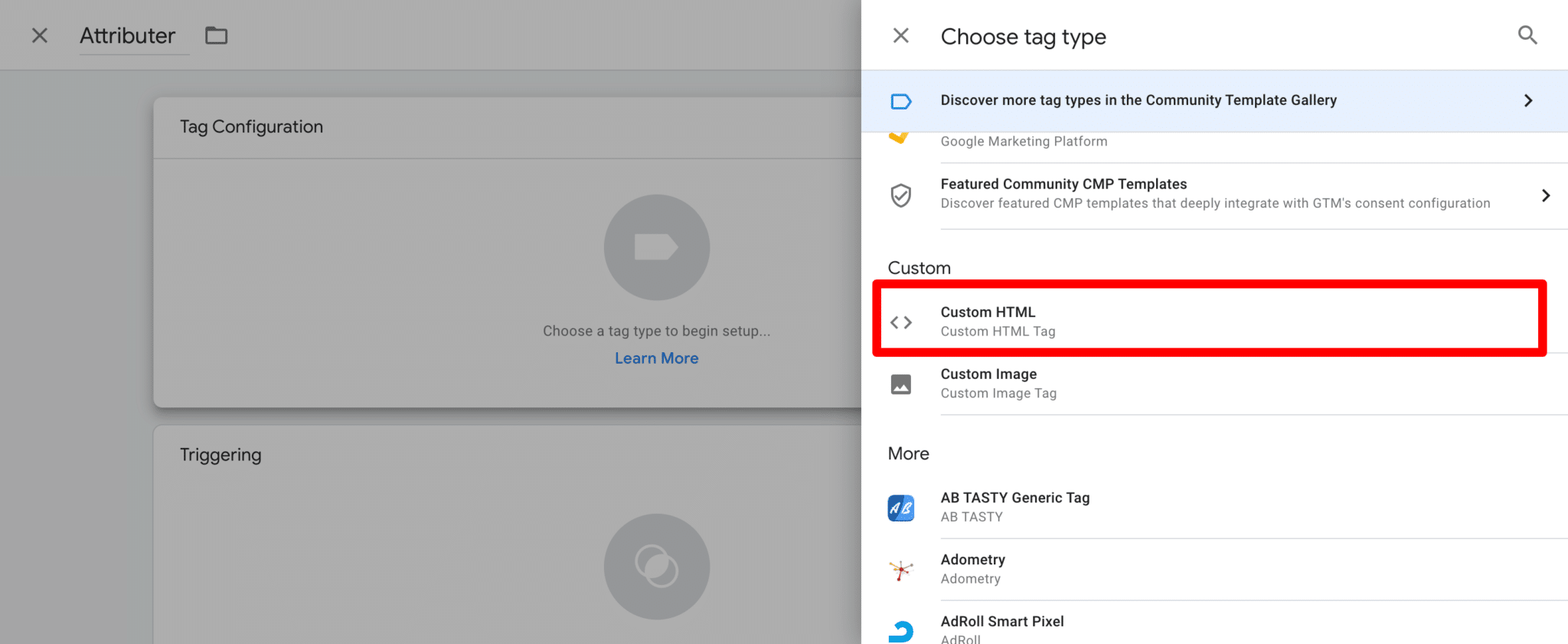
Step 4: Set it to fire on all pages
Next, click the Triggering box and choose All Pages. This makes the Converly code load on every page of your site, so it can track every form fill and booking. Once the tag configuration and trigger are both set, click Save in the top right.
Step 5: Publish your container
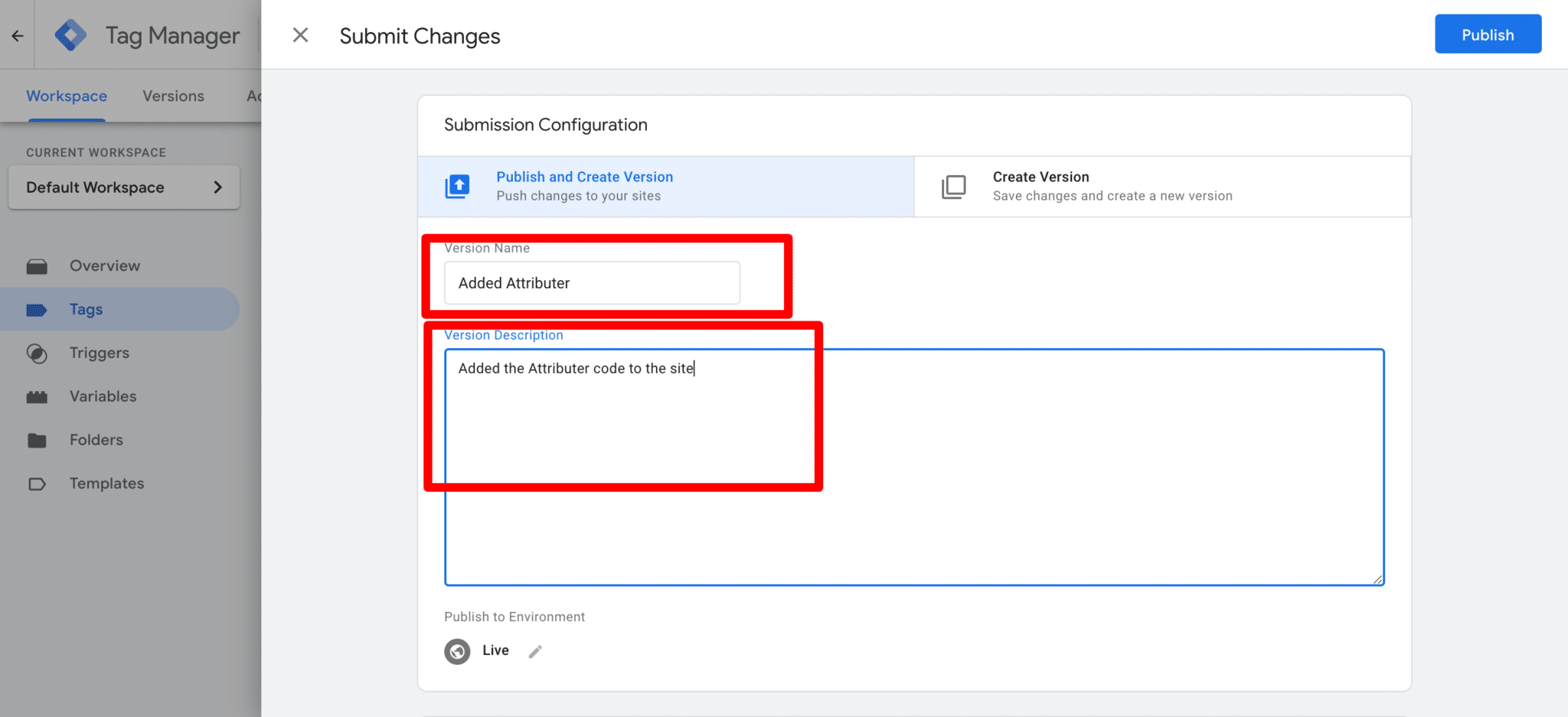
Tag Manager changes do not go live until you publish them. Click Submit in the top right, make sure Publish and Create Version is selected, give the version a name such as Added Converly, then click Publish.
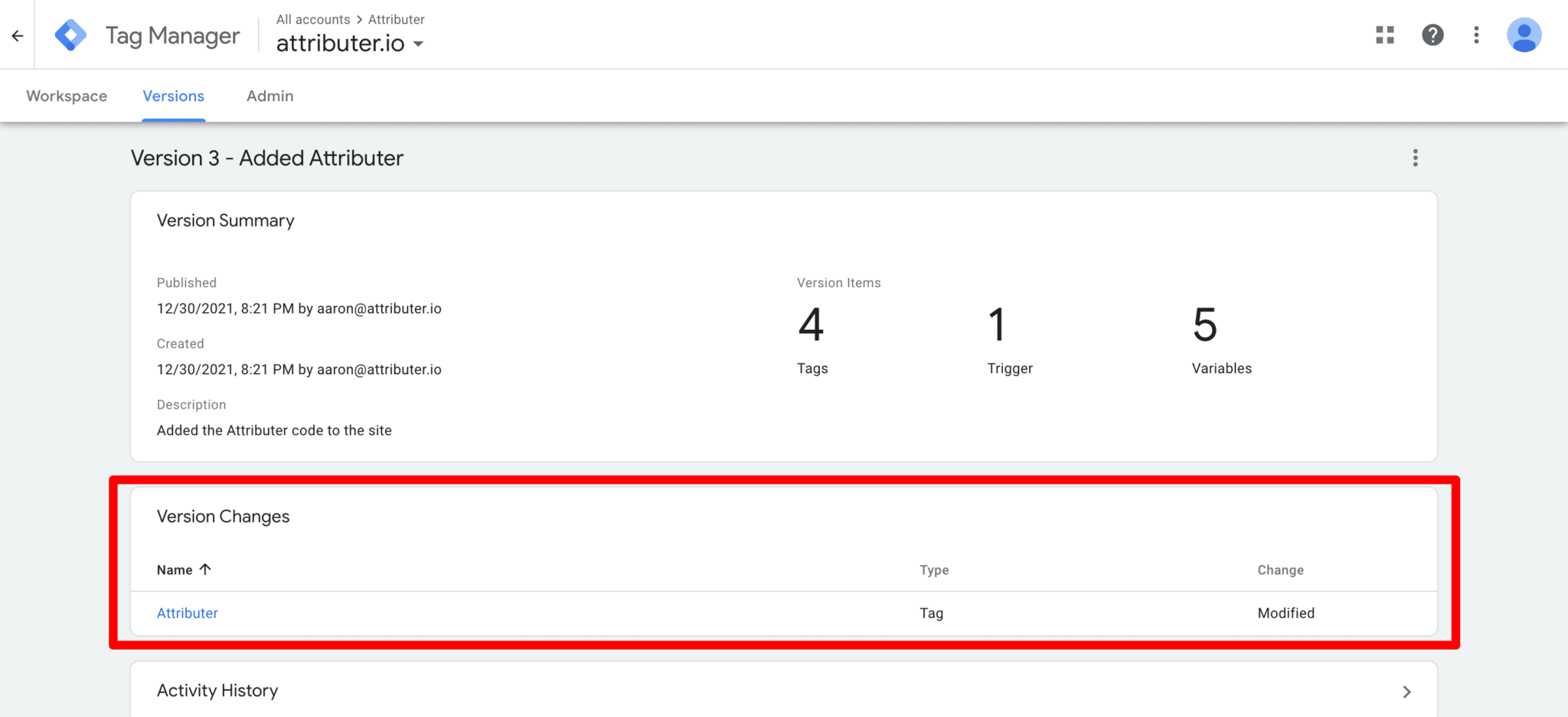
You can confirm it worked by checking that your Converly tag appears in the version summary.
Test it works
That's it! Converly is now installed through Google Tag Manager. To check it is working, open a new incognito window, go to your website, and submit a test entry through one of your forms. Then open the Activity page in Converly. If the code is installed correctly, the test conversion shows up there within a moment.
Paste your own code
Any code shown in a screenshot is only an example. Always paste the exact code from your own Install page, which contains the key that is unique to your site. Code copied from anywhere else will not track to your account.