
Beaver Builder is a page builder for WordPress. This guide turns submissions from its Contact Form and Subscribe Form modules into conversions you can send to Google Ads, Meta, or anywhere else.
There is no account to connect. To set it up, follow the instructions below:
Before you start: Converly needs to be installed on your WordPress site. Follow Install Converly on WordPress if you have not done that yet. Your form needs to be live on a published page.
Converly supports Beaver Builder's Contact Form and Subscribe Form modules. It works when the form shows a success message, shows nothing, or redirects to another page or another website. It also works for forms in a Button lightbox, forms in a Beaver Themer layout such as your footer, saved modules added with a shortcode, and several forms on 1 page.
The Login Form module is never counted. Forms from add-on packs, such as the PowerPack contact form, are not Beaver Builder forms and this trigger does not count them.
Forms with reCAPTCHA switched on have not been tested yet. We tested Beaver Builder 2.10. Older and newer versions have not been tested live. We tested the Subscribe Form with Beaver Builder's built-in Email Address service, not with Mailchimp or other email services. We also have not tested the in-app browsers inside apps like Instagram and Facebook on iPhone, or plugins that delay your site's JavaScript until a visitor interacts with the page.
Step 1: Create a flow
A flow is the rule that turns a form submission into a conversion. Click Flows in the left sidebar, then Create New Flow, and give it a name like "Contact form leads".
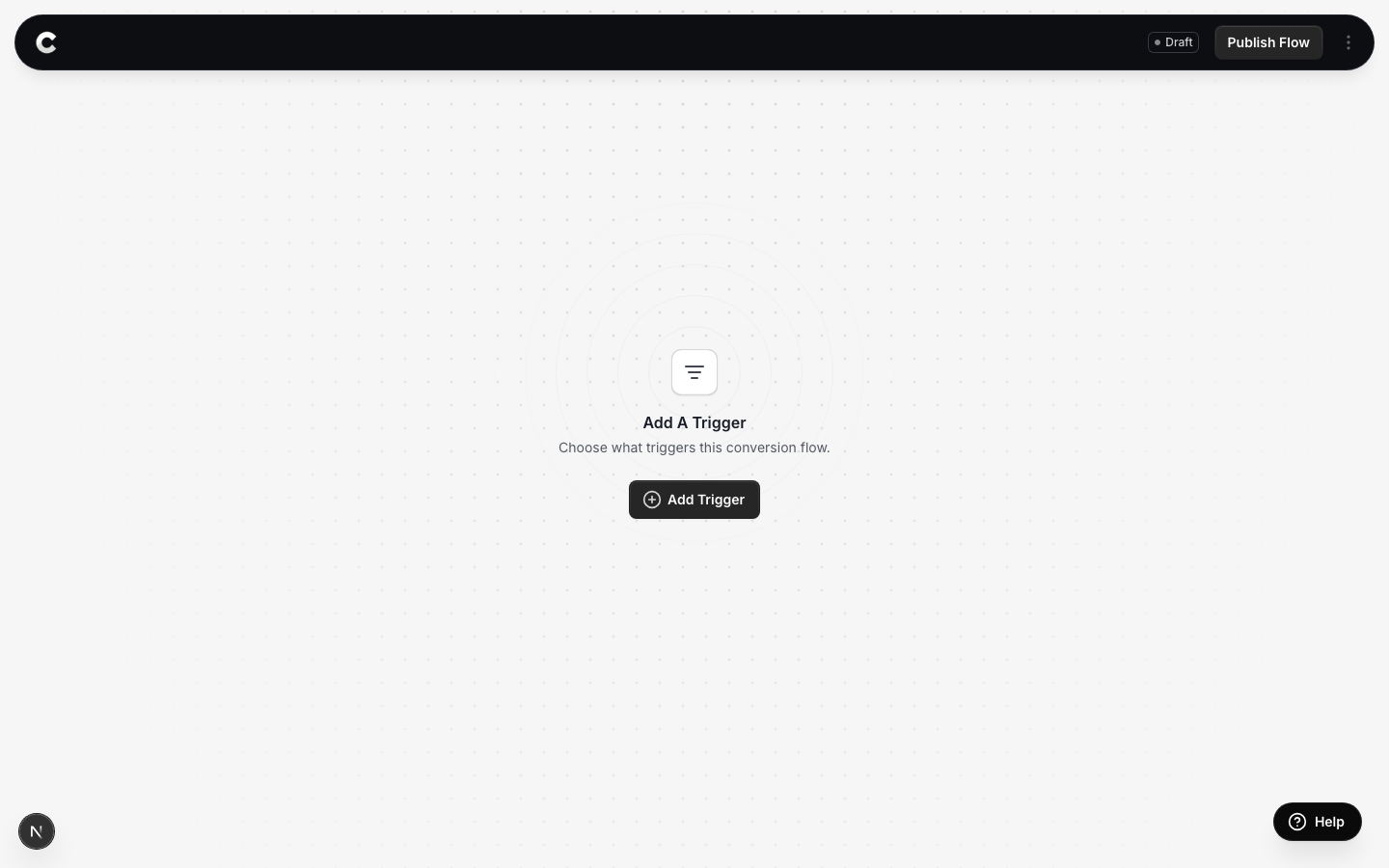
You land in the flow builder. It is empty for now. Click Add Trigger to choose what starts this flow.
Step 2: Choose Beaver Builder
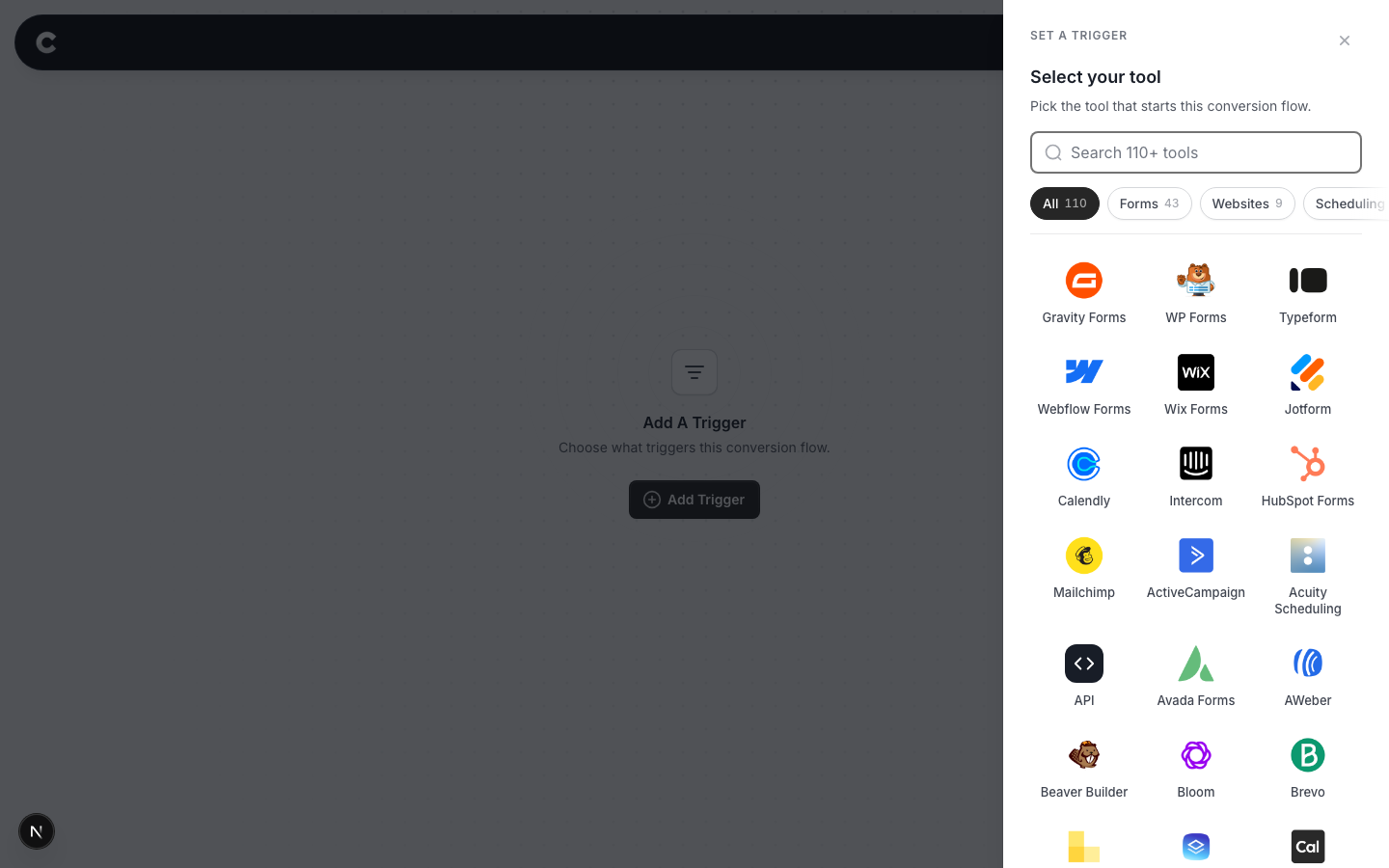
A panel slides in from the right listing every lead capture tool Converly supports, grouped by type. Beaver Builder is under the form builders.
Click Beaver Builder. If you do not see it straight away, scroll the panel or use the search box at the top.
Step 3: Choose where it fires
This step is the one to get right. Converly does not ask you to pick a specific form. It listens for any Beaver Builder Contact Form or Subscribe Form being accepted. The Page setting is the only filter available, so use it to choose which pages count.
Read this before you choose
If you do not set a specific page, this trigger fires every time any Beaver Builder Contact Form or Subscribe Form is accepted anywhere on your site. That includes a newsletter Subscribe Form in your footer, which appears on every page. To count just your contact form, choose the page containing it.
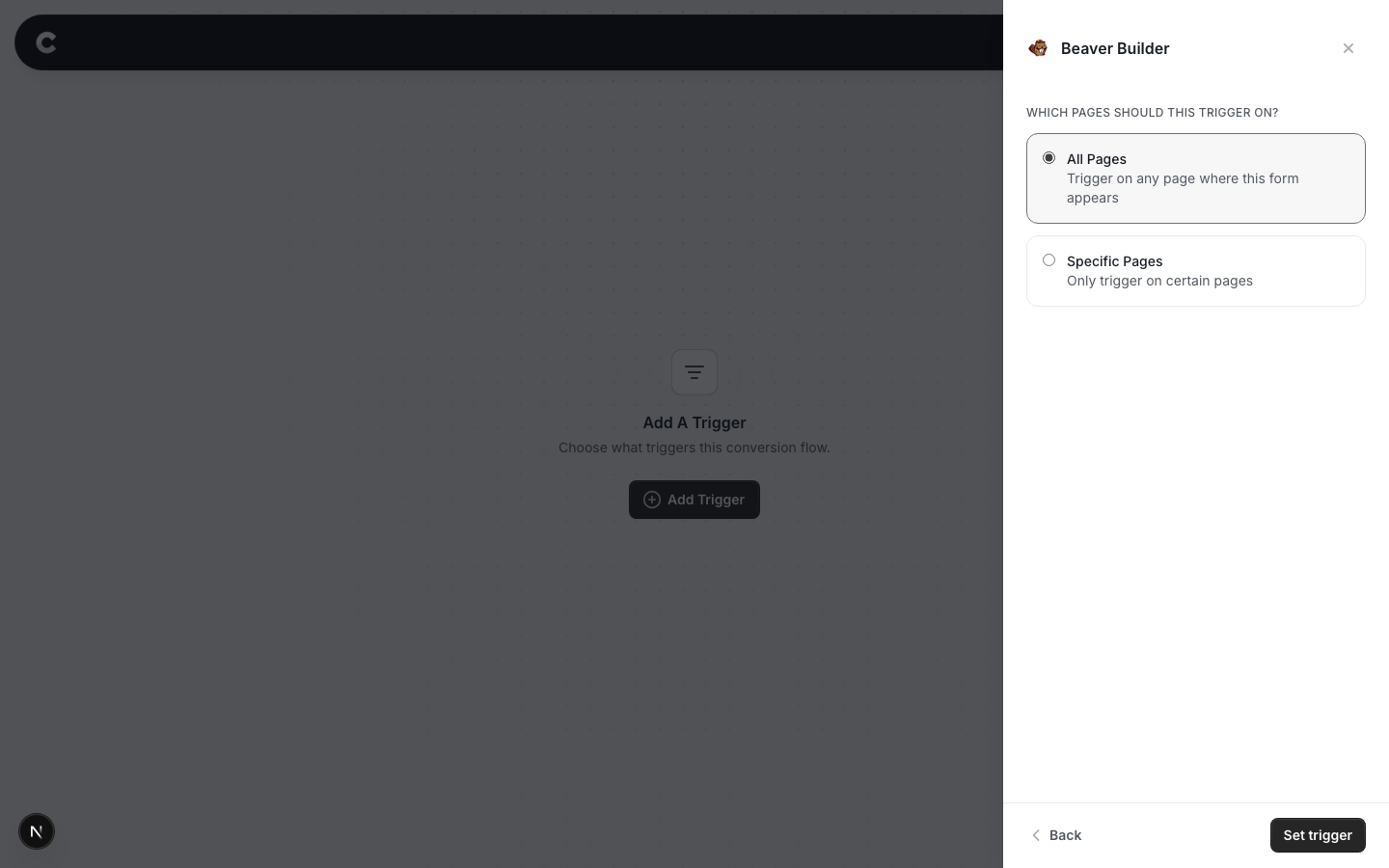
Option 1: Trigger on all pages
A conversion fires whenever Beaver Builder accepts a Contact Form or Subscribe Form on any page of your site. Choose this if all those submissions should count together.
Option 2: Trigger on specific pages
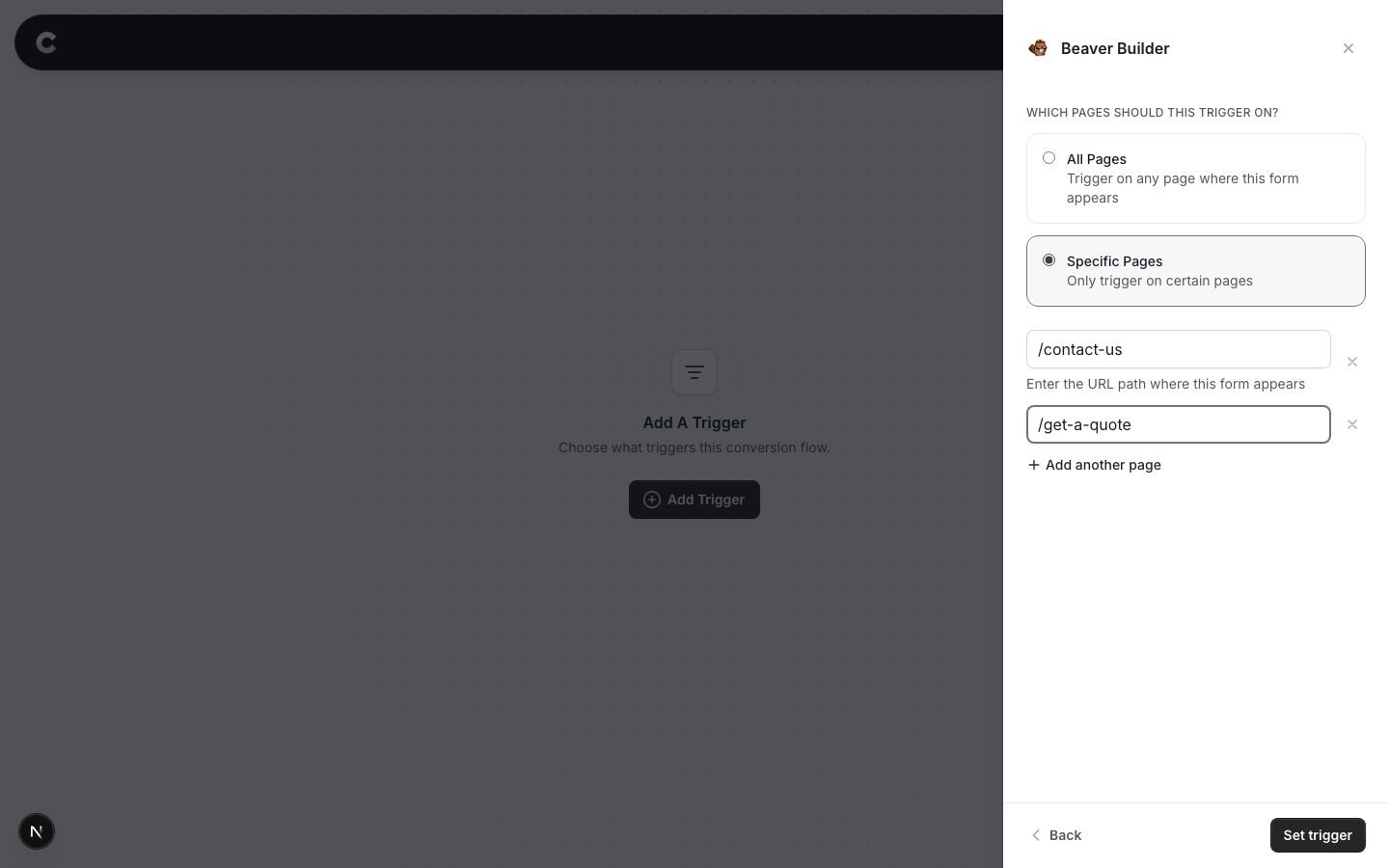
To count a form on https://www.yoursite.com/contact-us, select Specific Pages and enter /contact-us. The path is just the part after your domain. Start it with a slash, and do not include the domain.
Use the page containing the form, including for lightbox forms. Do not enter the thank-you page your form redirects to.
Click Add another page if the same form appears on more than 1 page, or the x to remove a page.
If 2 Beaver Builder forms share 1 page
Both forms count as the same conversion. That includes a footer Subscribe Form on your contact page. There is no setting to tell them apart yet. To count only 1 form, put it on its own page, or contact support for help with your setup.
When you have picked an option, click Set trigger.
What happens next
A trigger on its own does not send anything yet. Next you add 1 or more destinations (Google Ads, Meta, and so on) and publish the flow. See Building a flow for that part.
A form counts only once Beaver Builder has accepted the submission. Clicking Send does not count on its own. A submission with a missing field or an invalid email does not count, and neither does one Beaver Builder refuses, for example because a cached page's security check has expired. If the visitor fixes the problem and sends again, that accepted submission counts once. Double-clicking Send still counts once. You do not need a separate thank-you page trigger.
If your site also has an HTML Form flow, Beaver Builder forms are counted by the Beaver Builder flow only.
Converly can include contact details for matching. For Contact Forms, it sends the email address, the phone number exactly as typed, and the name when those fields are present. For Subscribe Forms, it sends the name and email when available, but no phone number. A single name such as "Jane Q Smith" is split into first name "Jane" and last name "Q Smith". The subject, the message and the terms checkbox are never sent. A Subscribe Form without a name field can still count, but gives your ad platforms less information for matching.
That's it! The final step is to test your setup in a new incognito window. Submit the form on your published page with a real email address and check that Beaver Builder shows its success message or redirect. Then click Logs in Converly's left sidebar and check the destination results for your test. You can read more about how to properly test your setup here.
If submissions are not showing up later, check that Converly loads on the published form page, your page paths match and the flow is Active rather than Draft. Blocked scripts, withdrawn advertising consent or leaving the page before Beaver Builder confirms the submission can prevent tracking. Contact support if the submission is accepted but still does not appear in Converly.