
Pipedrive lets you embed web forms on your website to capture leads. This guide turns supported redirect confirmations into conversions you can send to your ad platforms.
There is no account to connect. To set it up, follow the instructions below:
Before you start: Embed your Pipedrive web form on a live HTTPS website page and install Converly on that page. Follow Install Converly if you have not done that yet.
In the web form's after-submit settings, choose a redirect to a page on the same website. Enter the full HTTPS address, such as https://www.yoursite.com/thanks. Use exactly the same website address as the form page, including www if it has it.
Pipedrive's default inline thank-you message is not supported. It does not give Converly the confirmation this trigger needs. Redirects to another website do not count either.
Use Pipedrive's standard embed from webforms.pipedrive.com without adding an ID to its outer container. Multiple copies, pop-ups, forms added later, hosted form links and custom domains have not been verified. Forms with spam protection or CAPTCHA switched on have not been verified.
Step 1: Create a flow
A flow is the rule that turns a form submission into a conversion. Click Flows in the left sidebar, then Create New Flow, and give it a name like "Contact form leads".
You land in the flow builder. It is empty for now. Click Add Trigger to choose what starts this flow.
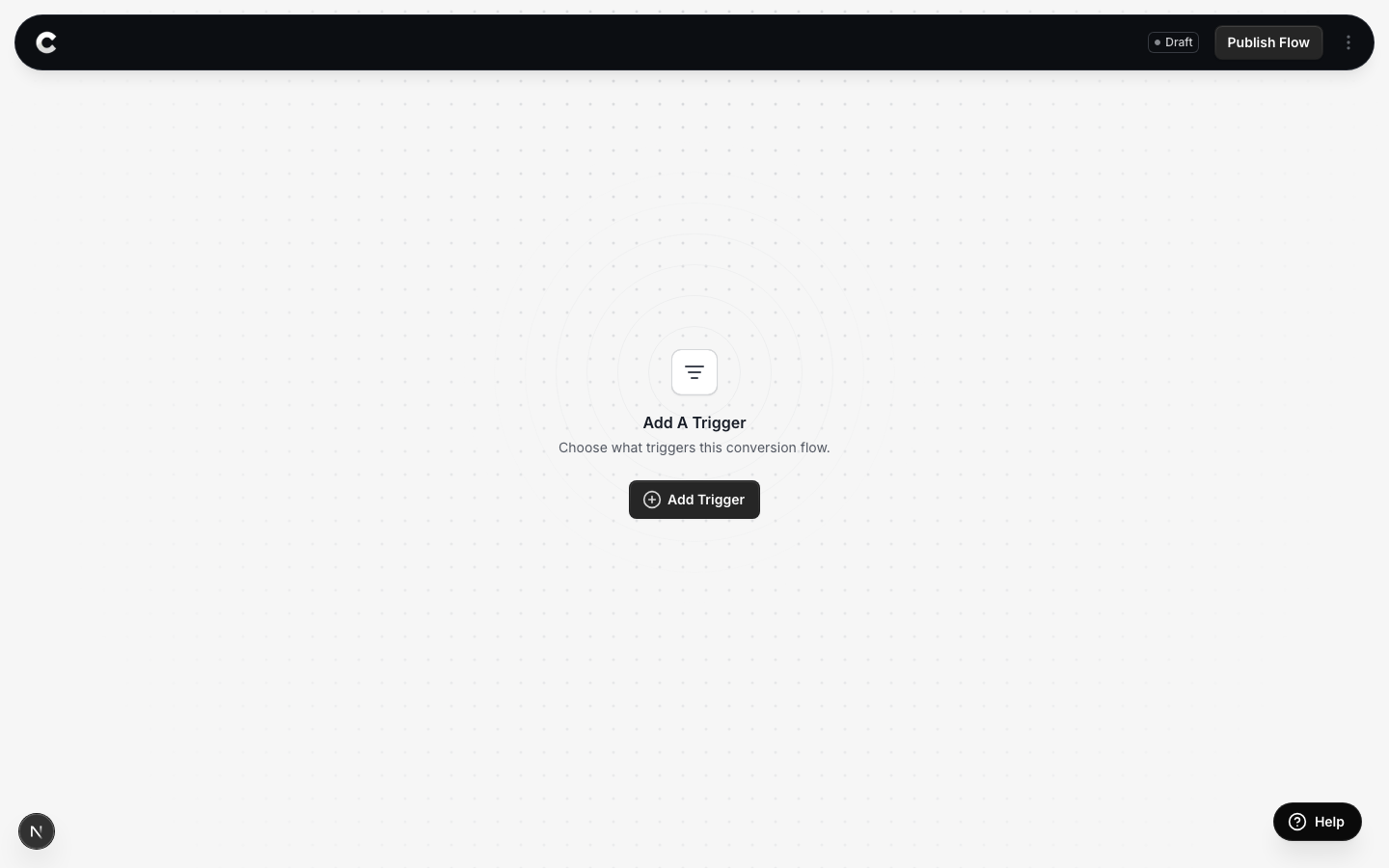
Step 2: Choose Pipedrive
A panel slides in from the right listing every lead capture tool Converly supports, grouped by type.
Simply click Pipedrive. If you do not see it straight away, scroll the panel or use the search box at the top.
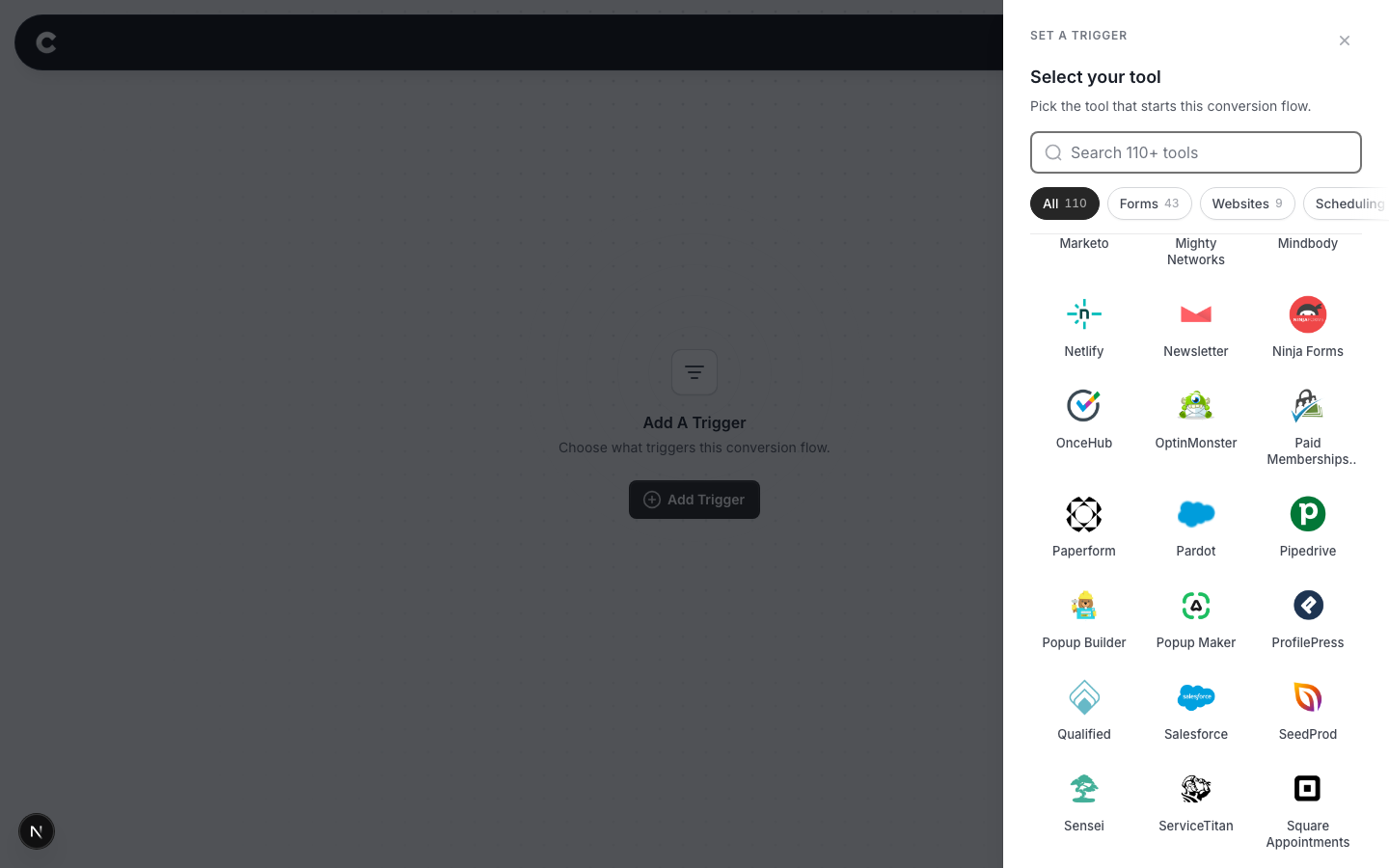
Step 3: Choose where it fires
Converly counts when a supported Pipedrive form confirms its redirect to your website. Use the page setting to choose which website pages count.
Read this before you choose
Without a specific page, every supported Pipedrive form on your site can contribute to the same conversion. To count only the ones on a particular page, choose that page.
Option 1: Trigger on all pages
A conversion fires when a supported Pipedrive form confirms its redirect to your website. This includes supported forms across your site. Choose this if all those submissions should count together.
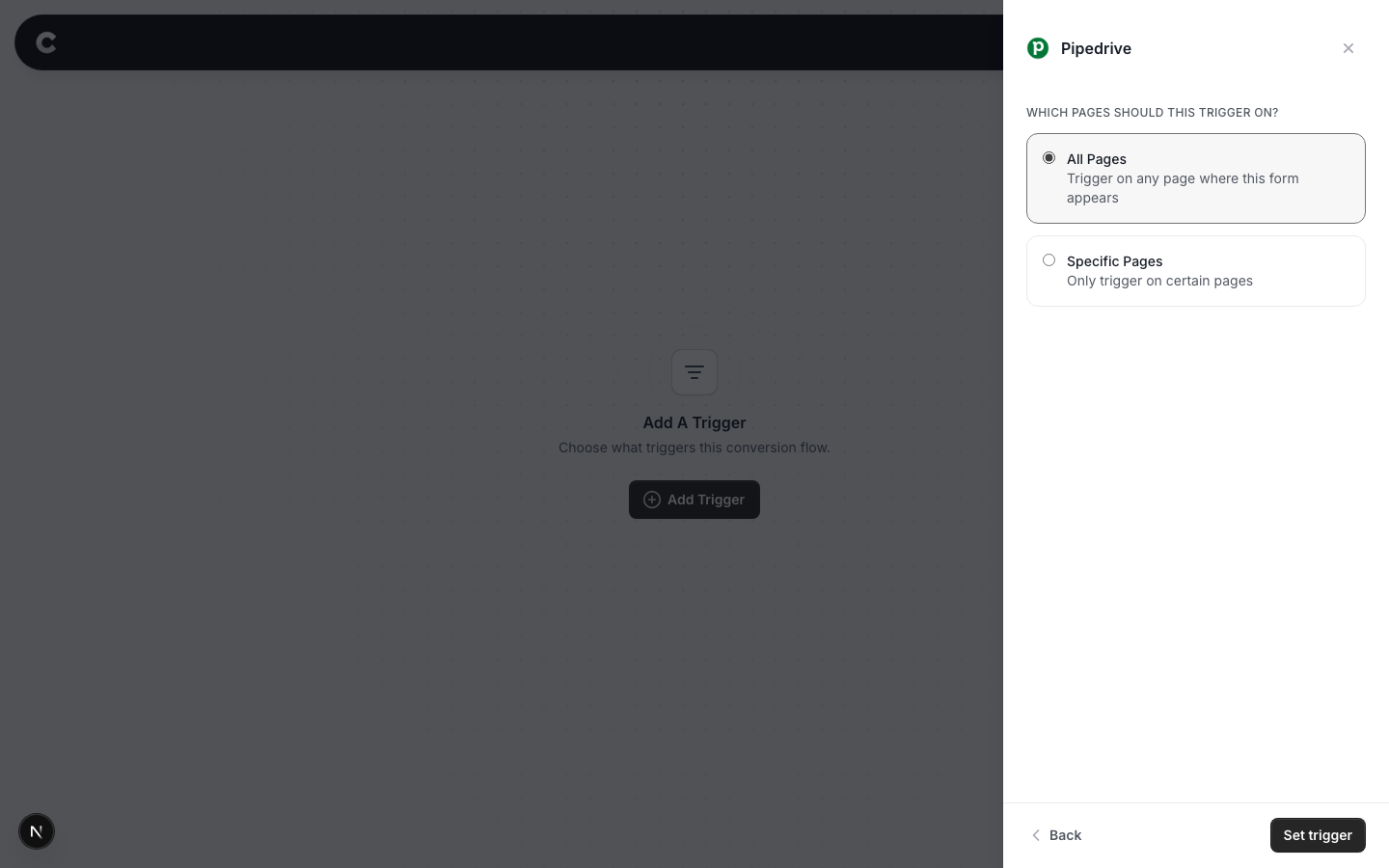
Option 2: Trigger on specific pages
To count a form on https://www.yoursite.com/contact-us, select Specific Pages and enter /contact-us. The path is just the part after your domain. Start it with a slash, and do not include the domain.
Use the website page containing the form or widget, including for pop-ups. Do not enter a hosted form address or a separate thank-you page.
Click Add another page if you want to include more than 1 page, or the x to remove a page.
If 2 forms or widgets share 1 page
Page filtering includes both, so both can count as this conversion. To count only 1, put it on its own page, or contact support before publishing.
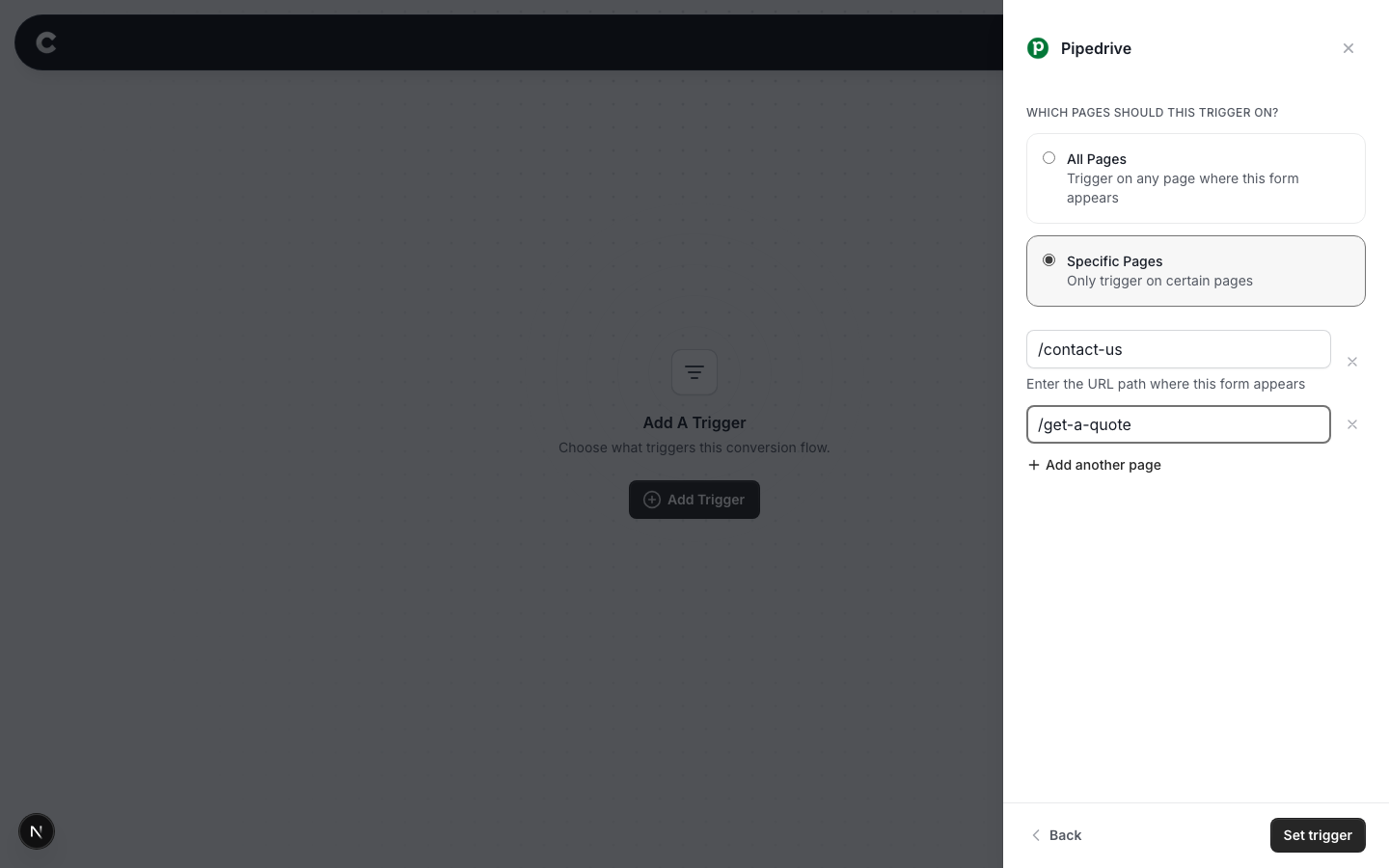
When you have picked an option, click Set trigger.
What happens next
A trigger on its own does not send anything yet. Next you add 1 or more destinations (Google Ads, Meta, and so on) and publish the flow. See Building a flow for that part.
Converly counts the redirect confirmation before the visitor leaves the form page. Opening or refreshing the thank-you page does not create a conversion.
Each embedded form can count once until a fresh copy loads. A second submission in the same open form does not count, and using Back does not reset it.
Converly does not capture a name, email address or phone number from Pipedrive. The fields run inside Pipedrive's own embedded frame, so this trigger supplies no contact details for matching.
That's it! The final step is to test your setup in a new incognito window. Submit the embedded form on your live website and check that it redirects to your thank-you page on your website. Then click Logs in Converly's left sidebar and check the destination results for your test. You can read more about how to properly test your setup here.
If submissions are not showing up later, check Pipedrive's redirect setting first. An inline thank-you message cannot count. Then check the HTTPS address, standard embed, page paths and that the flow is Active rather than Draft. Blocked scripts or withdrawn advertising consent can also prevent tracking.